
Tribhuvan International Airport Guide: Arriving at and Departing from Kathmandu (KTM)
On this page
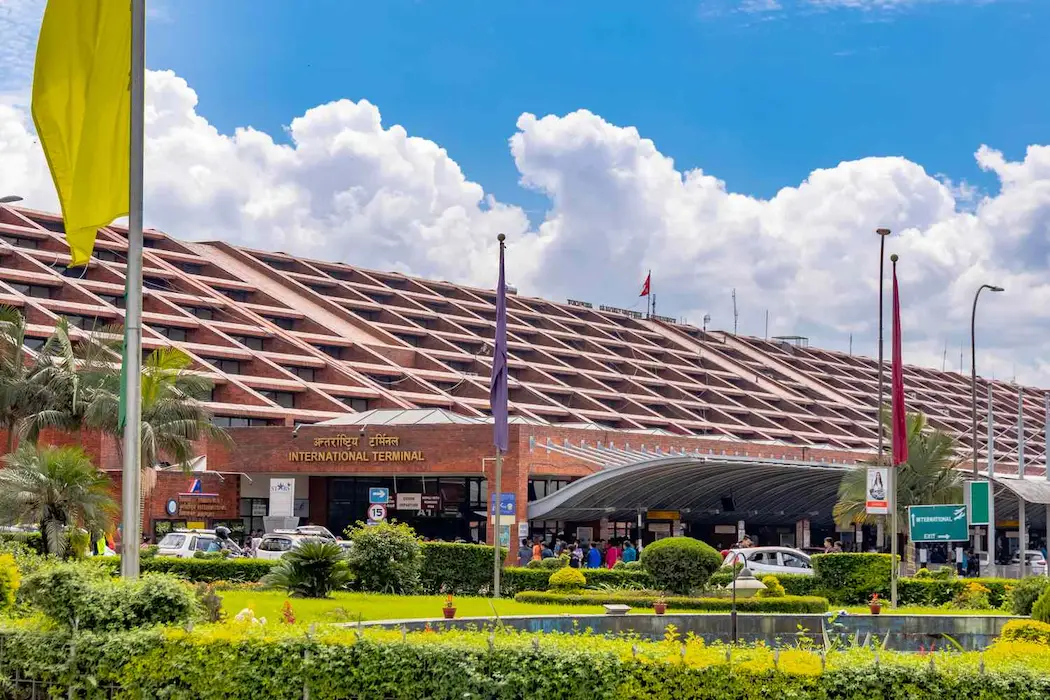
Tribhuvan International Airport is the gateway to Nepal for almost every international visitor. Its official code is KTM, and in Nepal it is usually called TIA. The airport is compact and easy to navigate once you know the order of things, but a few steps, such as the visa kiosks, the customs channels and boarding by stairs, surprise first-time visitors. This guide walks you through arriving and departing, step by step.
About the airport
- Name: the airport is named after the late King Tribhuvan Bir Bikram Shah Dev. It opened in 1949 as Gauchar Airport, was renamed Tribhuvan Airport in 1955 and became Tribhuvan International Airport in 1964.
- Location: about 6 km east of central Kathmandu and the Thamel tourist district, close to Pashupatinath Temple.
- Two passenger terminals: an International terminal for all international flights and a Domestic terminal for all domestic flights. The domestic terminal is about 500 metres north of the international terminal, within walking distance.
- Nepal's main gateway: most international flights to Nepal land here. Nepal's other international airports are in Pokhara and Bhairahawa (Gautam Buddha International Airport).
- No jet bridges: you board and leave every aircraft by stairs, more on this below.
- Flight times: the airport's flight information page shows arrivals and departures, and screens around the terminal show the latest updates.
Arriving in Kathmandu, step by step
1. Leaving the aircraft
There are no jet bridges at Tribhuvan International Airport. You walk down the aircraft stairs onto the apron, so keep one hand free for the rail and take care with heavy hand luggage. Depending on where the aircraft is parked, you either walk to the terminal or take the airport shuttle bus. If you are unsure where to go, follow the other passengers or ask airport staff for directions.
2. Get your visa on arrival
Most nationalities can get a tourist visa on arrival. Indian citizens do not need a visa, and children under 10 receive a free (gratis) visa. Nationals of a few countries are not eligible for a visa on arrival and must get one from a Nepalese embassy before travelling, so check before you fly.
- Fill in the tourist visa form. You can complete it online before you travel, on the Department of Immigration's online tourist visa form , or on the self-service kiosks in the arrival hall. Either way you get a submission receipt with a barcode, valid for 15 days. Have your passport, your arrival flight details and the address of your first hotel ready.
- Keep a copy of the receipt. The kiosks sometimes run out of paper or the printer stops working. If no receipt prints, take a photo of the confirmation screen showing your submitted form before you move on.
- Pay the visa fee at the bank counter next to the kiosks and keep the receipt. At the time of writing, a tourist visa costs USD 30 for 15 days, USD 50 for 30 days and USD 125 for 90 days. Fees can change, so check the up-to-date fees on the Department of Immigration's visa fees and documents page before you travel, or at the counter. US dollars in clean, undamaged notes are the easiest way to pay; other currencies and cards are also accepted. If you need cash, the money exchange counters and an ATM are in the arrival area before immigration.
Tourist visas allow multiple entries. The process usually takes less than an hour, but expect queues in the peak seasons. To skip the visa queue entirely, you can get a visa in advance from a Nepalese embassy or consulate.
3. Immigration
Take your passport, visa form receipt and payment receipt to the immigration desks. There are separate queues for foreign visitors and for Nepali citizens, so make sure you join the right one. The immigration officer issues your visa and stamps your passport.
4. Baggage claim
After immigration, collect your checked baggage from the baggage claim belts. Trolleys are free to use. If your bag is missing or damaged, report it to your airline at the baggage claim area before you leave, and keep the report form for your airline or travel insurance claim.
5. Customs: the green or red channel
Every arriving passenger passes through customs after baggage claim, through one of two exits:
- Green channel (marked with a green light): if you have nothing to declare, that is, no goods on which customs duty is payable.
- Red channel: if you have goods to declare. Customs officers assess the goods, and you pay the customs duty before you leave.
You must go through one of the two. Passing through the green channel with dutiable or prohibited goods can lead to the goods being seized and a fine. Common allowances, per the airport's FAQ:
- Alcohol: one litre without customs duty.
- Electronics: one laptop per person aged 18 or over, and one mobile phone, for personal use.
- Foreign currency: amounts above USD 5,000 (or equivalent) must be declared on arrival. Visitors may not take more than USD 5,000 in cash out of Nepal unless they declared it on entry.
For the full list of allowances and restricted items, see the airport's regulations page and the Department of Customs .
6. Leaving the airport
Once outside the terminal, taxis are available to take you to your hotel or destination. Agree the fare before you set off. Central Kathmandu and Thamel are about 6 km away, but allow extra time for traffic. Friends and family meeting you wait in the new arrival area in front of the international terminal, which is also where private cars pick up passengers.
The airport has free Wi-Fi throughout (network "Free_CAAN_WorldLink_WI-Fi"), handy for messaging your hotel or booking a ride.
Departing from Kathmandu, step by step
1. Arrive early
For international flights, arrive about three hours before departure. Check-in usually opens three hours before the flight and the counters close at least one hour before departure. There can be long queues at entry, at check-in and at immigration, especially in the peak seasons. Vehicles may only drop off passengers in front of the international terminal, and the number of people who can see you off inside is limited.
2. Check in and drop your bags
Enter the check-in area through one of the entry gates (A1, A2, B1 or B2) by showing your ticket and passport to security staff. Find your airline's counter on the screens, as counter numbers change, then check in, drop your checked baggage and collect your boarding pass. A weighing scale is available before the check-in area if you want to check your bag's weight, and baggage wrapping is available in the check-in area (B side).
3. Departure immigration
Take the escalator up to departure immigration, where an officer checks your passport and visa and stamps you out of Nepal.
4. Duty-free shops and lounges
After immigration and before the final security check, you will find the duty-free shops and the business lounges. Do your shopping and use the lounge before you go through security, because you cannot come back out once you have passed it.
5. Security check
At the security checkpoint, your hand luggage is X-rayed and you walk through a metal detector. There are often separate queues for men and women, so join the right one. Put laptops, tablets and phones through the X-ray separately, and keep liquids in containers of 100 ml or less.
6. Waiting area and boarding
After security, there is a single departure waiting area serving all the boarding gates, so you cannot get lost. Sit near the gate on your boarding pass and listen for announcements. When your gate opens, you either walk to the aircraft or take the airport shuttle bus, then climb the stairs to board. The stairs can be long and steep, so pack hand luggage you can carry up comfortably.
Domestic flights and connections
All domestic flights, including flights to Pokhara and mountain sightseeing flights, use the Domestic terminal. If you are connecting from an international flight, collect your bags, clear customs and exit the arrival hall, then walk to the domestic terminal about 500 metres away or take the free shuttle bus, which runs about every 20 minutes. Domestic flights can be delayed by weather, particularly by morning fog in winter, so leave plenty of time between connections.
What to pack, and what not to
- Hand luggage: liquids, aerosols and gels in containers of 100 ml or less; wired chargers are allowed. Carry prescription medicines with your doctor's prescription.
- Not in checked baggage: power banks, and valuables such as jewellery, gold, silver and cash. Carry valuables in your hand luggage and declare them at check-in where required.
- Not allowed at all: drugs and narcotics, firearms and explosives, dangerous goods, counterfeit currency, and items restricted by Nepal law, such as antiques.
- There is no left-luggage service at the airport, so plan to keep your bags with you.
Facilities at a glance
- Free Wi-Fi throughout the airport
- Money exchange counters and an ATM in the arrival area before immigration, and an ATM outside the international departure terminal
- Medical centres at both terminals, open while the airport operates
- Wheelchairs and priority queues for elderly passengers, parents with infants, pregnant women and passengers with disabilities; arrange assistance with your airline in advance
- A baby feeding room at the international and domestic departure lounges
- Free baggage trolleys
- Hotels within a few minutes' walk of the terminal
For the full list, see the airport's Airport Facilities page .
Useful contacts
- International terminal duty office: +977-1-4113163
- Domestic terminal duty office: +977-1-4113299
- Immigration at TIA: +977-1-4113045
- Customs at TIA: +977-1-4470382
- Airport website: tiairport.com.np
Plan your flight with us
Tulip Creation Travels & Tours books international and domestic flights to and from Kathmandu at reasonable prices, and can arrange your visa paperwork, hotel and airport transfer too. Request a flight quote or get in touch to start planning.
Frequently asked questions
- What is the airport code for Kathmandu?
Kathmandu's Tribhuvan International Airport has the code KTM. It is also widely known as TIA, short for Tribhuvan International Airport.
- Who is Tribhuvan International Airport named after?
It is named after the late King Tribhuvan Bir Bikram Shah Dev. The airport opened in 1949 as Gauchar Airport and became Tribhuvan International Airport in 1964.
- Can I get a visa on arrival at Kathmandu airport, and how much is it?
Yes, most nationalities can. Fill in the online tourist visa form before you fly or at the kiosks in the arrival hall, pay the fee at the bank counter, then go to the immigration desk. At the time of writing, it costs USD 30 for 15 days, USD 50 for 30 days and USD 125 for 90 days; check the up-to-date fees on the Department of Immigration website and carry US dollars in cash. Children under 10 get a free (gratis) visa.
- Are there jet bridges at Tribhuvan International Airport?
No. Passengers use stairs to get on and off the aircraft, and either walk across the apron or take the airport shuttle bus between the aircraft and the terminal.
- How early should I arrive for an international flight from Kathmandu?
Arrive about three hours before departure. Check-in usually opens three hours before the flight and counters close at least one hour before departure.
- How do I get between the international and domestic terminals?
The domestic terminal is about 500 metres north of the international terminal, within walking distance. A free shuttle bus also runs between the two terminals about every 20 minutes.
Continue reading
Travel Guide
Things to Do in Nepal: From Everest to Chitwan
Travel Guide